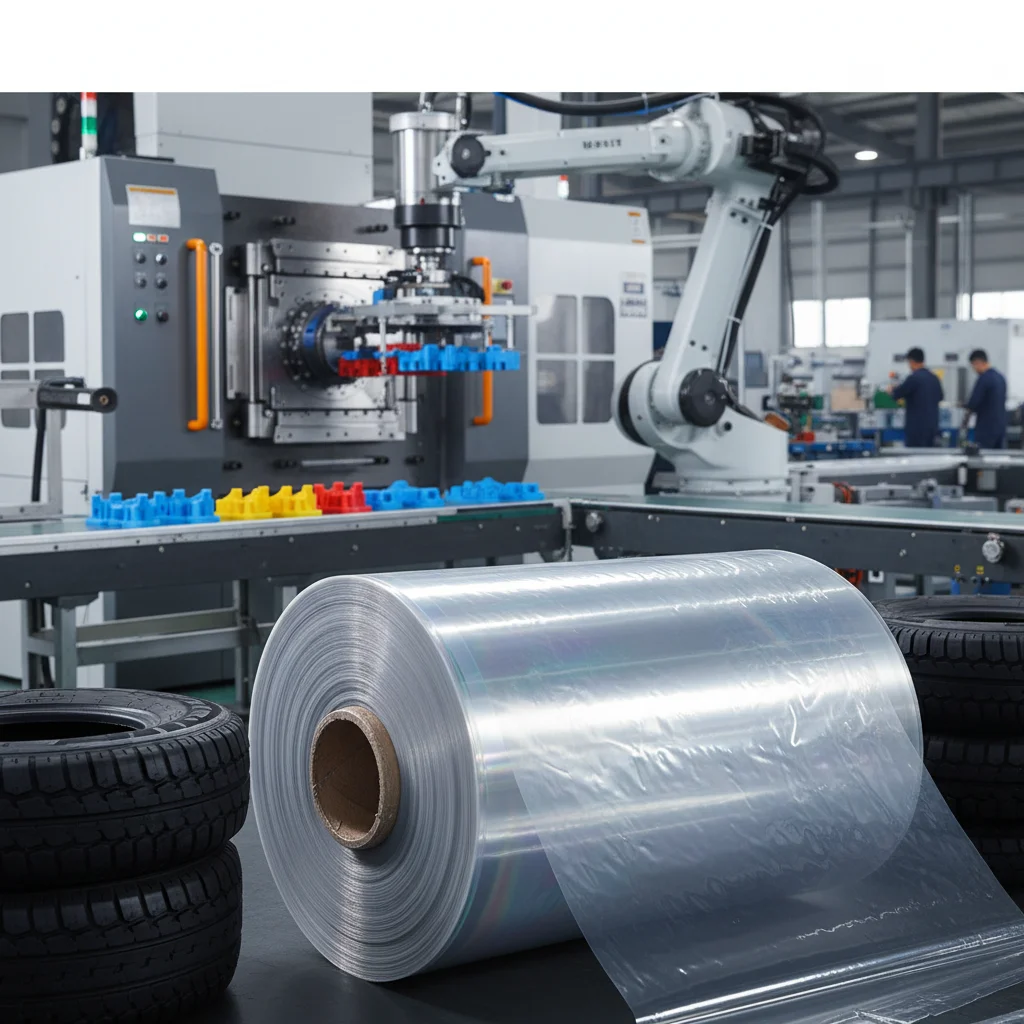
Procuring protective packaging often leads to a common friction point: the balance between unit cost and material performance. For businesses in the garment care and textile industry, the packing plastic roll price is rarely a fixed number, as it fluctuates based on polymer density, gauge thickness, and customization requirements.
The shift toward specialized garment protection—specifically for luxury dry cleaning and high-end apparel—has changed how procurement managers evaluate value. It is no longer just about the lowest price per roll, but about the cost of failure, such as garment contamination, wrinkles during transit, or a diminished brand image upon delivery.
Understanding the technical drivers behind pricing allows businesses to optimize their supply chain. By analyzing material properties and production scales, operators can select packaging that secures high-value apparel while maintaining sustainable operational costs.

Polymer Foundations of Packaging Costs

At the core of every packaging roll is the raw resin selection. In the plastics industry, the primary distinction lies between High-Density Polyethylene (HDPE) and Low-Density Polyethylene (LDPE). HDPE is characterized by its higher molecular strength and rigidity, which typically results in a slightly higher unit cost but offers superior tear resistance.
Conversely, LDPE provides a softer, more flexible feel with significantly higher clarity. This makes LDPE ideal for lightweight daily wear where visual identification is a priority. The price variance between these two is influenced not only by the resin market but by the energy required for the blown film process.
Technical Drivers of Material Performance
The efficacy of a garment cover is determined by its ability to act as a barrier against environmental contaminants. Technical parameters such as moisture resistance and tensile strength are critical. For instance, HDPE rolls are engineered to handle the load of heavy winter coats without stretching or rupturing, ensuring that the garment remains secured on its hanger throughout the transport cycle.
Another critical technical consideration is the inclusion of ventilation holes. Without proper airflow, moisture trapped inside a sealed plastic bag can lead to dampness or odors, potentially compromising the fabric of the clothing. Professional-grade rolls integrate these strategic perforations to maintain a stable micro-environment for the garment.
Furthermore, transparency plays a dual role: operational efficiency and customer experience. High-clarity LDPE allows staff to quickly identify garments without opening the package, reducing handling time and the risk of accidental wrinkles. The balance of clarity versus strength is the primary technical trade-off in material selection.
The Value Equation in Garment Care
When evaluating the packing plastic roll price, businesses must look beyond the invoice and consider the total cost of ownership. This includes the reduction in garment damage claims and the enhancement of brand perception.
True packaging value is realized when the material's protective capacity eliminates the need for re-pressing garments due to transit friction or dust contamination.
Customization also adds a layer of intangible value. Integrating logo printing and brand messaging directly onto the film transforms a utility item into a marketing tool. This professional presentation signals a commitment to quality care, which justifies premium pricing for the end service provider.
Relative Suitability Index by Material
Different garment types require different material properties. To illustrate this, we can look at a relative suitability index where a higher value indicates a better match for a specific garment category. HDPE excels in heavy-duty applications, while LDPE is the standard for lighter, high-visibility needs.
By mapping these properties, procurement officers can diversify their inventory—using HDPE for winter wear and LDPE for shirts and dresses—thereby optimizing costs without sacrificing protection.
Figure 2. Material Suitability Comparison Index
Practical Application Scenarios
In a typical industrial dry cleaning facility, the operational flow requires packaging that can be deployed rapidly. A manufacturer evaluating their supply chain would prioritize rolls that integrate seamlessly with automatic bagging systems. Here, the consistency of the film gauge is paramount; any variation can lead to machine jams and costly downtime.
Furthermore, for boutique garment care providers, the focus shifts to the "unboxing" experience. In this scenario, a flexible LDPE bag with high-definition logo printing is preferred, as it enhances the perceived value of the service, making the protective layer part of the luxury brand's visual identity.
Sustainable Transitions in Plastic Films
The garment care industry is facing increasing pressure to reduce environmental waste. This has led to a significant shift toward recyclable plastics and the adoption of non-woven fabric alternatives. While traditional PE films offer unmatched moisture barriers, the move toward eco-compliance is becoming a non-negotiable requirement for many corporate clients.
Biodegradable and semi-degradable vest bags are emerging as viable solutions. These materials are designed to break down more rapidly than standard polymers, reducing the long-term footprint of single-use garment covers. However, the technical challenge remains in maintaining the same level of tear resistance and clarity as virgin LDPE.
Forward-thinking businesses are now implementing a tiered packaging strategy: using high-durability recyclable plastics for long-term storage and biodegradable films for short-term transport. This hybrid approach balances environmental responsibility with the uncompromising need for garment protection.
Procurement Decision Framework
Selecting the right packaging involves weighing multiple variables. The decision should not be based on price alone but on a matrix of durability, transparency, and load capacity. A failure to match the material to the garment weight can lead to ripped packaging and dissatisfied customers.
When comparing LDPE and HDPE, the primary trade-off is between clarity and strength. LDPE is the superior choice for visual presentation and soft-touch flexibility, whereas HDPE is the engine for heavy-duty protection and bulk transport of winter apparel.
The following framework provides a relative comparison to assist in selecting the most appropriate material based on specific garment requirements.
| Selection Factor | LDPE (High Pressure) | HDPE (Low Pressure) | Recommended Use Case |
|---|---|---|---|
| Relative Unit Cost | Lower / Affordable | Slightly Higher | Budget-conscious bulk |
| Material Feel | Soft & Flexible | Strong & Robust | Luxury vs. Utility |
| Visual Clarity | High Transparency | Semi-Transparent | Quick identification |
| Load Bearing | Low to Moderate | High Capacity | Heavy winter coats |
| Tear Resistance | Moderate | Superior | Long-distance transport |
| Best Application | Shirts / Daily Wear | Bulk / Outerwear | Diversified inventory |
Questions & Answers
HDPE (Low Pressure) rolls are engineered for high strength and durability, making them the ideal choice for heavy winter coats and bulk transport where tear resistance is critical. LDPE (High Pressure) rolls are softer, more flexible, and offer superior transparency, which is better suited for lightweight daily clothing like shirts and dresses where visual clarity is prioritized.
Customization, such as adding a company logo or brand messaging, typically increases the initial cost due to the setup of printing plates and the use of specialized inks. However, this investment is often offset by the marketing value it provides, as branded packaging enhances professional image and customer trust in the garment care industry.
Yes, many businesses are transitioning to reusable garment bags made from thicker recyclable plastics or non-woven fabrics. Additionally, the industry is adopting biodegradable and semi-degradable materials that break down more efficiently than standard PE, helping companies meet modern environmental regulations while maintaining garment protection.
Ventilation holes allow for essential air circulation. Without them, moisture can become trapped inside the bag, which may lead to dampness or the development of musty odors. This is particularly important for garments that have been freshly pressed and need to breathe slightly before being stored or transported.
Yes, by enclosing the garment securely on its hanger, the bag creates a physical barrier that minimizes external friction and prevents the fabric from shifting or rubbing against other surfaces. This stability is key to preserving a professional, smooth look from the cleaning facility to the customer's wardrobe.
Rolls are generally more cost-effective for high-volume operations using automatic bagging machinery, as they reduce packaging waste and labor. Pre-cut bags are better for small-scale operations or specialized items that require specific sizing and manual handling. The choice depends on your daily volume and equipment capacity.
Final Thoughts
Selecting the optimal garment packaging is a strategic decision that balances raw material costs with operational risks. Whether opting for the robust protection of HDPE or the high-clarity appeal of LDPE, the goal is to ensure that the apparel reaches the customer in the same pristine condition it left the press.
As the industry moves toward sustainable materials and smarter procurement, the most successful businesses will be those that view packaging not as a disposable expense, but as a critical component of their quality assurance and brand identity.