
Introduction
When businesses search for cheap plastic tote bags, the primary concern is often balancing low unit costs with the structural integrity required for daily transportation. In the competitive landscape of the packaging industry, "cheap" should not imply fragility, but rather an optimization of materials and manufacturing processes to achieve maximum value. For many retail and commercial entities, the tote bag serves as the final touchpoint of the customer experience, making its quality a reflection of the brand itself.
The strategic importance of selecting the right polymer film—whether PE or PP—directly impacts the operational efficiency of a business. In the context of Hot Products, Packaging Bag categories, the ability to source affordable yet durable carriers allows companies to reduce overhead costs without compromising the safety of the goods being transported. This is particularly critical for high-volume sectors where packaging waste can significantly erode profit margins if the materials are not precisely tailored to the weight and size of the contents.
Navigating the technical trade-offs between thickness, tensile strength, and cost requires a deep understanding of plastic film manufacturing. By analyzing the relationship between material density and durability, procurement managers can identify the optimal specifications that prevent failure while maintaining a budget-friendly price point. This guide explores how to evaluate cheap plastic tote bags through a professional lens, focusing on the technical factors that ensure long-term reliability in various commercial environments.
Understanding the Composition of Low-Cost Polymer Bags
Most affordable plastic tote bags are manufactured using Low-Density Polyethylene (LDPE) or High-Density Polyethylene (HDPE), depending on the required flexibility and strength. LDPE provides a softer, more flexible feel often seen in boutique bags, while HDPE offers higher tensile strength and a "crinkly" texture common in grocery carriers. The cost-efficiency of these bags is derived from the blown film extrusion process, which allows for high-speed production of continuous tubes of plastic that are subsequently sealed and cut to size.
Beyond the base resin, the integration of additives such as UV stabilizers or recycled content can influence both the price and the performance. In professional manufacturing, the goal is to maintain a consistent gauge (thickness) throughout the bag to prevent "thin spots" that lead to premature failure. By optimizing the resin blend, manufacturers can produce bags that feel substantial to the end-user while minimizing the total volume of plastic used, thereby reducing the cost per unit without sacrificing the functional utility of the packaging.
Technical Determinants of Tote Bag Durability
The reliability of a budget-friendly plastic bag is determined by several engineering factors, most notably the seal strength and the handle design. Heat-sealing is the critical point of failure in most low-cost bags; if the temperature or pressure is inconsistent during the sealing process, the bottom of the bag may open under moderate loads. Professional-grade production ensures that the weld is fused at a molecular level, providing a bond that is often stronger than the film itself.
Handle reinforcement is another key variable. Die-cut handles are cost-effective for lightweight items, but for heavier loads, reinforced loop handles or vest-style handles are necessary to distribute stress. The load-bearing capacity is not just a function of the material thickness but also of how the stress is distributed across the bag's geometry. A well-designed "cheap" bag utilizes geometric physics to maximize its weight limit, ensuring that the plastic does not stretch excessively or tear at the stress points.
Furthermore, the surface treatment of the plastic affects how it interacts with the contents. For instance, a smooth, pore-free surface is essential for preventing moisture ingress and dust accumulation. When bags are used for clothing or electronics, the chemical stability of the plastic is paramount to ensure that no residues are transferred to the product. This technical balance between material economy and functional protection is what separates professional industrial packaging from generic low-quality alternatives.
Operational Value of Optimized Packaging Materials
Optimizing packaging materials provides value by reducing the total cost of ownership for the business. When a company selects a bag that is exactly suited to its needs—neither over-engineered nor under-powered—it eliminates waste. This precision reduces the cost per shipment and lowers the environmental impact associated with excessive plastic use. The operational value is realized when the packaging performs its primary function of protection without becoming a significant cost center.
The true value of an optimized plastic tote bag lies in the intersection of material gauge and load-bearing efficiency; selecting a bag that utilizes high-tensile HDPE allows for a thinner film that can carry more weight than a thicker, low-grade LDPE alternative, effectively lowering costs while increasing performance.
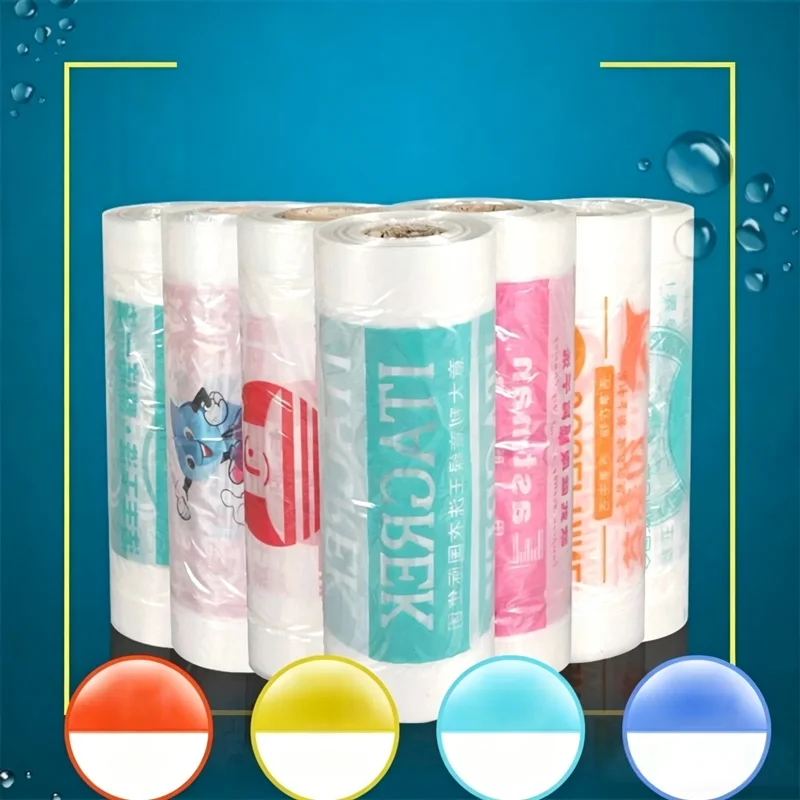
Moreover, the ability to customize these bags with brand logos via gravure printing transforms a simple utility item into a mobile marketing tool. Each bag carried by a customer serves as a visual advertisement, extending the brand's reach beyond the store. This adds a layer of marketing ROI to the packaging expenditure, shifting the perception of the bag from a "cost of doing business" to a "customer acquisition asset," provided the print quality remains clear and fade-resistant.
Comparative Analysis of Plastic Film Types
Selecting between different plastic films requires an understanding of how their physical properties align with the intended use. HDPE is characterized by its high strength-to-density ratio, making it the ideal choice for heavy-duty grocery or industrial bags where cost-per-unit must be kept at an absolute minimum. In contrast, LDPE is preferred for applications requiring clarity and a premium feel, such as retail clothing bags, despite having a slightly higher cost and lower tensile strength.
When analyzing these materials, procurement officers often look at the "burst strength" and "elongation at break." HDPE typically has a lower elongation rate, meaning it does not stretch as much before breaking, which prevents the bag from sagging when full. LDPE stretches significantly, which can be an advantage for irregularly shaped items but a disadvantage for heavy, dense loads. The following data illustrates the relative performance characteristics of common film types used in budget tote production.
Relative Material Performance (Scale 1-100)
Critical Use Cases for Budget Plastic Packaging
Budget plastic tote bags are indispensable in high-turnover environments such as supermarkets, fast-food outlets, and temporary event distributions. In these scenarios, the bag is a transient tool—its primary requirement is to get the product from the point of sale to the customer's vehicle securely. The use of HDPE vest bags in these settings maximizes efficiency because they can be dispensed rapidly and folded compactly, reducing the storage footprint within the retail space.
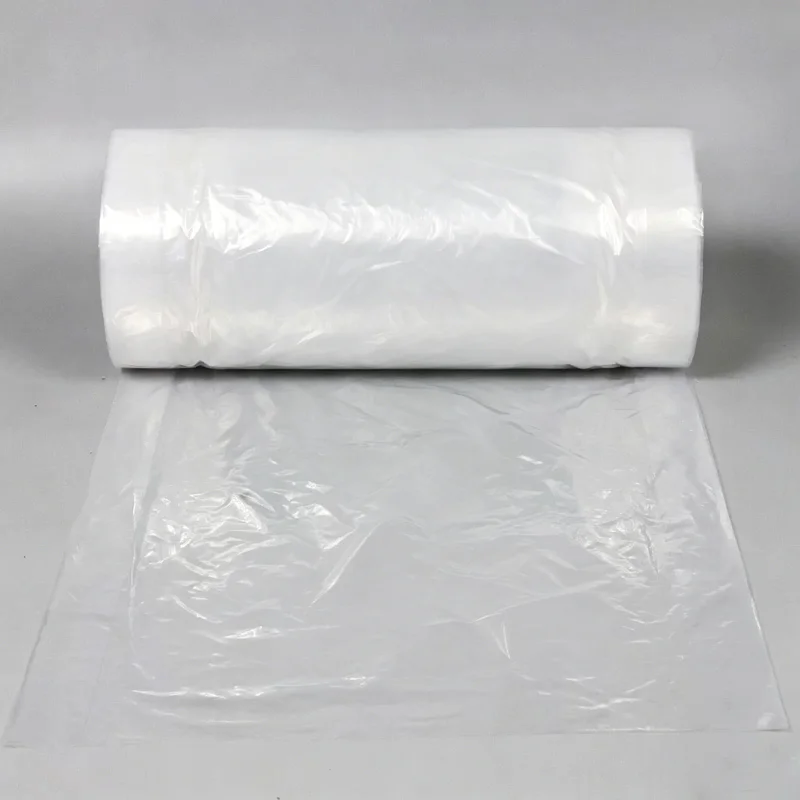
Beyond retail, these bags are utilized in industrial settings for the organization of small components or as primary dust covers for finished textiles. In the garment industry, customized roll bags are used to protect dry-cleaned clothing from moisture and dirt during transit. The versatility of the continuous roll format allows the user to cut the bag to the exact length of the garment, eliminating material waste and ensuring a snug fit that prevents the clothing from shifting, thus maintaining the professional presentation of the service.
Material Evolution and Sustainability Trends
The industry is currently shifting toward a balance between affordability and environmental responsibility. The introduction of semi-degradable and fully biodegradable films represents a significant technological leap. These materials are designed to break down more rapidly than traditional PE, reducing the long-term ecological footprint without requiring a complete overhaul of the existing blowing and sealing machinery.
Another trend is the move toward "down-gauging," which involves using advanced resin blends to create thinner bags that maintain the same strength as their thicker predecessors. This approach directly reduces the amount of plastic entering the waste stream while simultaneously lowering the cost of raw materials for the manufacturer. It is a rare instance where sustainability goals align perfectly with cost-reduction objectives.
For businesses, the transition to sustainable plastics is often driven by both regulatory pressure and consumer demand. However, the challenge remains in maintaining the "cheap" aspect of the tote bag. The industry is responding by scaling production and improving the efficiency of biodegradable polymer synthesis, aiming to bring the price point of eco-friendly bags closer to that of conventional plastics.
Mitigating Risks in Bulk Bag Procurement
Procuring plastic bags in bulk carries inherent risks, primarily related to quality inconsistency and lead-time volatility. A common issue is "gauge variation," where the thickness of the film fluctuates across a single roll, leading to unpredictable failure rates in the field. To mitigate this, professional buyers should insist on samples from the middle of a production run rather than just the start, ensuring that the manufacturer's quality control is stable throughout the entire batch.
Another risk is the use of subpar recycled resins that can introduce impurities or odors into the packaging, which is particularly problematic for food or clothing applications. Verifying the source of the resin and ensuring the manufacturer follows a scientific quality management system is essential. A reliable partner, such as Ningjin Xinrong Plastic Industry Co., Ltd., leverages decades of experience to ensure that material purity is maintained even in low-cost product lines.
Finally, the logistics of bulk ordering can impact the total cost. Large quantities often yield better wholesale pricing, but excessive inventory can lead to material degradation if stored in high-heat or UV-exposed environments. A balanced procurement strategy involves calculating the optimal order quantity that maximizes the discount while ensuring a fresh supply of materials.
Procurement Evaluation Matrix for Plastic Totes
| Evaluation Factor | Budget (HDPE) | Premium (LDPE) | Eco-Friendly (PLA) |
|---|---|---|---|
| Unit Cost | Very Low | Moderate | High |
| Tensile Strength | High | Moderate | Moderate |
| Flexibility | Low | Very High | Moderate |
| Visual Clarity | Translucent | Transparent | Transparent |
| Environmental Impact | High | High | Low |
| Best Use Case | Grocery/Utility | Retail/Boutique | Sustainable Brands |
Frequently Asked Questions
Cost-efficiency is achieved through the use of High-Density Polyethylene (HDPE) and the blown film extrusion process. By optimizing the material gauge—making the film as thin as possible while maintaining structural integrity—manufacturers can reduce raw material costs. Quality is maintained by ensuring precise heat-sealing and consistent film thickness, which prevents the bag from tearing under load.
HDPE is generally superior for heavy-duty budget applications. It possesses a higher tensile strength and does not stretch as much as LDPE, meaning it can support heavier weights without sagging. LDPE is better suited for lightweight, premium-feel bags where flexibility and clarity are more important than raw strength.
Handle reliability depends on the design and the seal strength. For budget bags, vest-style handles are the most reliable as they distribute weight across the entire top seam. To ensure quality, check for a smooth, fused weld at the handle junction; a "puckered" or uneven seal is a sign of improper heat application and is likely to fail.
Modern biodegradable films, such as those made from PBAT or PLA blends, can match the strength of traditional PE, but they often have different stretch characteristics. While they are highly effective for most retail uses, they may have a slightly shorter shelf life and different temperature tolerances compared to traditional HDPE bags.
Custom printing using gravure technology adds a setup cost for the cylinders but has a very low per-unit cost for large volumes. For bulk orders, the increase in price per bag is minimal, while the added marketing value of brand exposure often far outweighs the slight increase in production cost.
Plastic films are sensitive to UV light and extreme heat, which can make them brittle. Store your bags in a cool, dry place away from direct sunlight. Using opaque outer packaging or storing them in a climate-controlled warehouse ensures that the polymer chains remain flexible and the bags maintain their full strength until used.
Conclusion
Finding the ideal balance in cheap plastic tote bags requires a shift in focus from the lowest possible price to the lowest possible cost-per-performance. By understanding the technical differences between HDPE and LDPE, and prioritizing seal integrity and handle geometry, businesses can secure packaging that protects their products while safeguarding their budgets. The transition toward down-gauging and biodegradable materials further proves that economic efficiency and environmental awareness are no longer mutually exclusive.
Choosing a manufacturer with a proven track record in blown film printing and a scientific quality management system is the most effective way to mitigate procurement risks. Whether you require high-volume standard carriers or customized branded solutions, prioritizing technical specifications over nominal price leads to better operational outcomes. For professional guidance on selecting the right packaging specifications for your business, you can explore the capabilities and product range at https://www.prosperplastics.com.