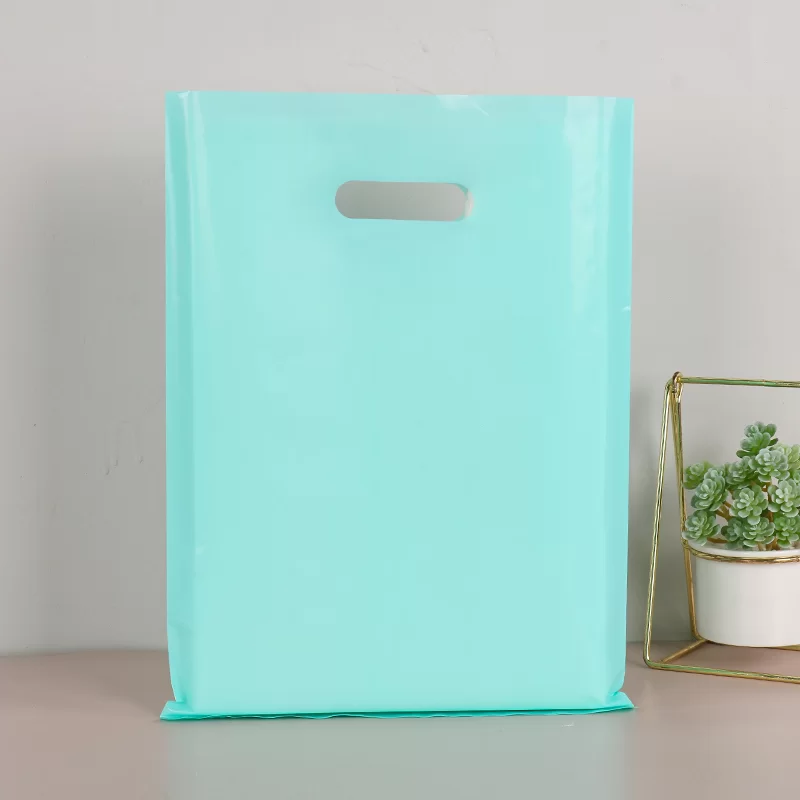

For emerging brands and specialized retailers, the ability to secure custom plastic bags with logo no minimum requirements is a critical driver for market entry. Branded packaging transforms a simple utility item into a portable advertisement, enhancing brand recall and perceived professional value. This article explores the technical and commercial considerations for businesses seeking high-quality, small-batch personalized packaging without the burden of massive inventory overhead.
In the competitive B2B landscape, the shift toward flexible order quantities allows companies to test new designs or seasonal promotions without risking significant capital. The challenge lies in maintaining industrial-grade quality—such as puncture resistance and print clarity—while operating at lower volumes. Understanding the relationship between material density, printing methods, and the overall utility of the carrier bag is essential for making an informed procurement decision.
Readers will learn how to evaluate different plastic polymers, the impact of micron thickness on durability, and how to select a manufacturer capable of delivering consistent results. By analyzing specific application scenarios—from high-capacity industrial transport to boutique retail—this guide provides a framework for optimizing packaging efficiency while maximizing brand visibility through strategic customization.
Strategic Value of Low-Volume Branded Packaging
The transition from generic packaging to branded solutions marks a pivotal step in a company's growth. Traditionally, the printing industry imposed high Minimum Order Quantities (MOQs) to offset the setup costs of plates and machinery. However, the emergence of advanced blown film printing and digital processing has enabled manufacturers to support smaller orders. This flexibility is particularly valuable for startups or niche businesses that require a professional image but cannot justify storing tens of thousands of units. Using custom plastic bags with logo no minimum constraints allows for agile marketing, where a brand can update its logo or messaging in real-time to match current trends.
Beyond aesthetics, professional packaging serves as a quality signal. When a customer receives a product in a reinforced, branded bag, it communicates a level of investment and reliability. In industrial contexts, this extends to functionality; for instance, using a specific color-coded branded bag can help in warehouse organization or logistics tracking. The strategic goal is to balance the cost per unit with the marketing ROI, ensuring that the packaging contributes to the overall value proposition of the product being delivered.
Procurement Guide for Customized Plastic Solutions
Selecting the right packaging involves more than just picking a color. It requires a technical assessment of the intended use, the weight of the contents, and the environmental conditions the bag will encounter. The following sections detail the key specifications that determine whether a customized bag will perform its duty or fail during transit.
Material Selection for Brand Image
The choice between HDPE (High-Density Polyethylene) and LDPE (Low-Density Polyethylene) fundamentally changes the bag's feel and strength. HDPE is characterized by its crinkly texture and superior strength-to-density ratio, making it ideal for heavy-duty vest bags. LDPE, conversely, offers a glossy, smooth finish and higher clarity, which is often preferred for high-end retail apparel or adhesive bags. Choosing the wrong material can lead to a mismatch between the brand's luxury positioning and the actual tactile experience of the customer.
| Material Type | Tactile Feel | Primary Strength | Best Use Case |
|---|---|---|---|
| HDPE | Matte / Crinkly | High Tensile Strength | Industrial / Grocery |
| LDPE | Smooth / Glossy | High Flexibility | Clothing / Boutiques |
| PP | Rigid / Clear | Optical Clarity | Stationery / Gifts |
| Biodegradable | Varies | Eco-Compliance | Sustainable Brands |
| Thickened HDPE | Firm | Puncture Resistance | Heavy Equipment/Bulk |
| Composite Film | Layered | Moisture Barrier | Food / Chemical |
Logo Printing Techniques
Print quality is the most visible indicator of professional packaging. Depending on the volume and complexity of the logo, different methods are employed. Gravure printing offers the highest precision for large runs, while flexographic printing is widely used for versatility in B2B packaging. When ordering small quantities, it is essential to verify the ink adhesion to the plastic substrate to prevent peeling or smudging, especially for bags used in humid environments or for transporting heavy items that may rub against the print.
Understanding Film Thickness
Thickness, measured in microns, directly correlates with the bag's durability. A standard retail bag might range from 15 to 30 microns, whereas heavy-duty industrial bags, such as the Extra Large Vest Bags produced by Ningjin Xinrong, utilize a thickness of 30 to 60 microns. This increased gauge ensures that the bag can withstand the sharp edges of products and prevents stretching under load, which is critical for maintaining the integrity of the brand's presentation during delivery.
Load-Bearing Capacity Analysis
The "break point" of a bag depends on both material and construction. For vest-style bags, the reinforcement of the handles is the primary failure point. High-quality manufacturing ensures that the heat-sealing process creates a bond that can support weights up to 25kg for heavy-duty specifications. Procurement officers should request load-bearing data to ensure that the bags provided can safely handle the heaviest items in their inventory without risking a tear that could lead to product loss.
Design Styles for Retail and Industry
Packaging geometry must align with the product's shape. Vest-style (tank top) bags are optimized for ease of carry and high volume, while flat bags or self-adhesive bags are better for shipping individual items. For specialized needs, options like buckle handbags or zipper bags add a layer of utility and reusability, which increases the lifespan of the branded bag in the customer's home, thereby extending the duration of the brand's advertising exposure.
Eco-Friendly Material Alternatives
With increasing global regulations on single-use plastics, transitioning to semi-degradable or fully biodegradable materials is no longer optional for many industries. These materials are engineered to break down more quickly in the environment without sacrificing the strength required for commercial use. Implementing recyclable HDPE options allows companies to meet corporate social responsibility (CSR) goals while still benefiting from the cost-effectiveness of plastic packaging.
Supplier Evaluation Criteria
When sourcing small-batch branded bags, the supplier's manufacturing infrastructure is key. A company with over 20 years of experience, like Ningjin Xinrong Plastic Industry Co., Ltd., provides a safety net of quality management systems that prevent common errors in color matching and sizing. Buyers should look for suppliers who offer a balance of wholesale pricing for small quantities and the technical capacity to handle complex customizations, ensuring a seamless supply chain regardless of the order size.
FAQ
What is the best material for branded bags that need to carry heavy items?
For heavy-duty applications, thickened High-Density Polyethylene (HDPE) is the superior choice. It offers higher tensile strength and puncture resistance compared to LDPE. For instance, industrial-grade vest bags with a thickness of 30-60 microns can safely support loads up to 25kg, making them ideal for agricultural or large-scale retail needs.
Can I get high-quality logo printing on very small orders?
Yes, modern manufacturing processes allow for professional logo customization without requiring massive MOQs. By utilizing flexible printing platforms, manufacturers can produce branded packaging for startups and small businesses. The key is to provide a high-resolution vector file of your logo to ensure the print remains sharp regardless of the order size.
What is the difference between a vest bag and a flat bag for branding?
A vest bag (or tank top bag) features integrated handles and is designed for high-volume transport and retail convenience. A flat bag is a simpler rectangle often used for internal packaging or shipping. For brand visibility, vest bags are generally more effective as they are carried by the customer in public spaces, acting as a mobile billboard.
How do I ensure the bag thickness is correct for my product?
You should evaluate the weight and the "sharpness" of your product. For lightweight items, 15-20 microns suffice. For bulky or heavy items, 30-60 microns are recommended. If your product has edges that could pierce the plastic, prioritize HDPE over LDPE due to its superior puncture resistance.
Are there environmentally friendly options for customized branded bags?
Absolutely. Many manufacturers now offer semi-degradable or fully biodegradable plastic options. These materials provide the same functional benefits as traditional PE bags—such as moisture resistance and strength—while significantly reducing the long-term environmental footprint, which is a strong selling point for eco-conscious brands.
How do I evaluate a supplier's capability for custom orders?
Check for three main factors: production history (e.g., 20+ years of experience), quality management systems, and the breadth of their product range. A supplier that can produce everything from OPP adhesive bags to biodegradable vest bags likely has the technical flexibility to handle a variety of custom specifications and quality requirements.
References and further reading
- Polyethylene properties and industrial applications: Plastic bags technical overview
- Guidelines for B2B Packaging Procurement and Quality Control Standards
- Analysis of Biodegradable Polymers in Commercial Packaging Logistics
Related Articles